
When the Pointer Stops Between
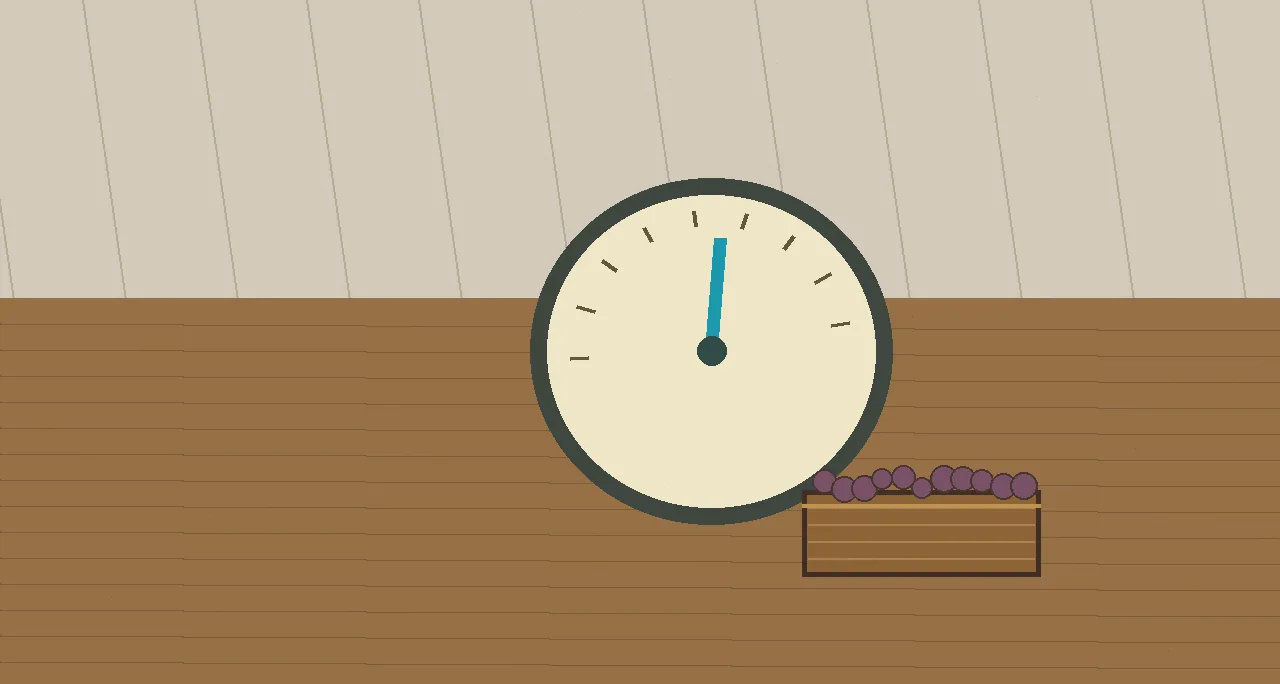
The pointer can stop between two marks when a vendor adds the last plum. In an early drawing it moved across the face of the scale and came to rest near the requested amount. The right side of the mark was dark, making the line look slightly wider from the lane. The shopper could tell that the scale moved but could not reliably read where it stopped. In a narrow version of the screen, the written amount was also squeezed into the corner of the dial.
We use this example in A Scale for Two Baskets to examine where a player should look before making an offer. The vendor has time to inspect the amount. A shopper also needs a way to recognize the reading when they stand a step away from the scale.
Hold the amount where it can be read
The earlier interface flashed a written number when the pointer advanced. If you looked toward the basket instead of the dial at that moment, you could miss the number. We changed the sequence so that the number stays visible beside the pointer when the movement ends. To test the basic case, the scale, basket and label all remain on the page up to the next choice. A player can read the amount, inspect which crate supplied the fruit, and come back to the same amount.
A short word next to the label says whether the scale is empty or in use. It stops a blank reading from looking like a failed load. We keep that word beside the line that gives the amount. There is space between the label and the deep part of the dial, so the label remains visible when the basket moves closer to the edge of the picture.
Compare the buyer’s view
The heavier version of the picture gave the vendor a clear view of the marks while placing a painted sign in the way of the buyer’s dial. From the lane, the shopper could see the first half of the face and a change in the pointer. The label needed to move toward the part of the stand that both people could read. The latest drawing clips it to a low bracket under the dial. The price slate is taller and takes a different place in the frame.
In a second test, use the same amount from a different crate. The buyer sees a different label on the fruit but should still be able to identify the amount. If the names of the objects become the only clues, we have made the relationship too dependent on an explanatory screen. The small bracket stays with the scale so the two views can share an ordinary landmark.
Check the amount before changing the offer
Once the measurement is visible, the player can choose whether to remove a plum or show the buyer a different amount. Each option sits beneath the current reading. The offer can wait for a decision. The prototype uses a record of the earlier slate so that a change in the total has a reference that the buyer could reasonably have seen.
The equivalent question in The Late Price Board is whether a shopper can see which bundle belongs to a new price. A tidy board can still be unclear if it sits too far away from the thing it describes. In the market stalls, look for the bracket under the scale and the tag beside the bundle. Both offer an amount or price at the point where a buyer can compare it. The main lesson is about timing. Settle the pointer, leave the reading visible and give the shopper room to consider it before the next item moves.