
The Late Price Board
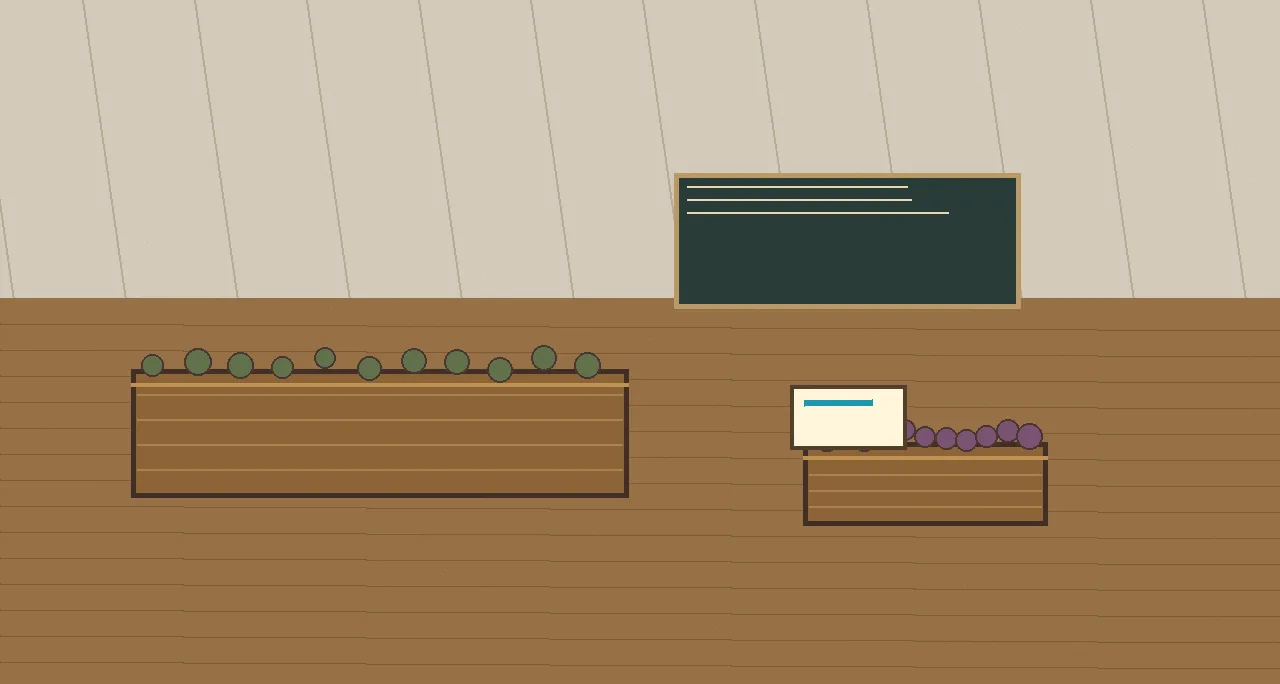
A folding table is opening beside the last crates on the lane. The crowd is beginning to thin out, but a neighbor who often buys from this stall has not arrived yet. Some produce can remain on the regular stand. A few pieces belong in a separate bundle that needs a visible description. The board at the front still shows an offer from when the table was full. You have a short turn before somebody stops where they can read the old card.
The Late Price Board is a game prototype about the sequence of changing an offer. It depicts an invented afternoon market and asks a small question. Which board and which crate will the next person see if the vendor changes only one part of the display? The result becomes visible after a shopper enters the lane.
Place the card where the offer lives
Begin by looking from the lane toward the crates, then return to the vendor’s side to choose how to group them. You can keep the earlier price for a main crate or move some of the fruit into a clearly marked late bundle. The new card can stand beside the bundle or on the taller slate. The position matters. A buyer approaching from the side may see the slate before they can see what sits on the folding table.
After placing a card, select the buyer view. If the two offers are visible in sequence, the shopper can compare them. If only the main price is visible, you can return to the stall view and adjust the lower card without moving every crate. The prototype records the position the card occupied. This matters when a second buyer approaches from another part of the lane.
Follow one buyer and keep the earlier offer
A neighbor may arrive expecting an amount they saw earlier. The earlier price can remain in the sale record with its time and the original number of pieces. The current board names what is still available and what a bundle contains. Keep these readings distinct as you consider whether the shopper has enough information. The game tests presentation and timing rather than connecting the choices to real currency.
When the stall closes, compare the first and second views of the board. A clear sequence can show something changed and let the buyer find what the new notice applies to. In a run where the bundle did not need to move, the vendor can leave the original sign above the main display. That becomes a different final arrangement to compare with the example in which the card sat beside the bundle.
Draw a sign that can be read sideways
The afternoon scene uses olive shades for the canvas and ochre for the folding board. The bundle has a distinct paper tag whose edge stays visible beside the crate. We keep the sequence available as still frames so the board can be read without a moving announcement. Each view includes the written offer and a short heading naming the source of the change.
The earlier game A Scale for Two Baskets asks which reading an individual shopper can verify before the sale. The market stalls put that decision beside the later display change. Use the two signs to see how a familiar market becomes a different space at another time of day.