
Rewrite the Board Before the Call
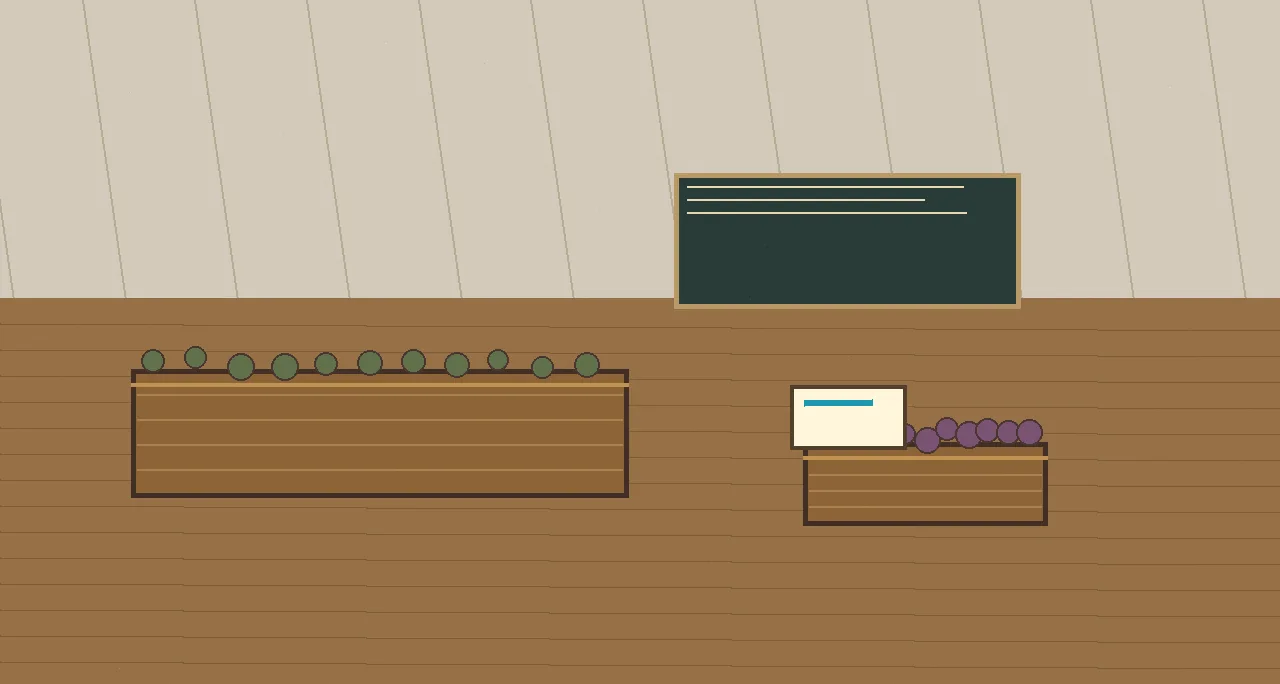
A vendor can write a new price before anyone stops to read it. They can also call a short notice while the old number remains on the board. In a lively lane, the new notice might reach a customer before the label beside the bundle is in the right position. The player then sees two prices at once without a clear way to tell which one belongs to the sale. The prototype needs a legible order for changing the offer.
In The Late Price Board, we split that moment into a board change, a call and an arrival. The three images share the same table and slate. Keeping the layout still through the transition helps a reader see the point at which the different offer became available. The game can then ask what a neighbor expects when they approach from either end of the lane.
Decide which sign carries the new offer
The tall slate belongs to the main crates. A smaller card can sit beside a late bundle. If the bundle changes, set its label before adding the call to the record. The game keeps both signs in the first drawing after the action. The smaller card can be read on its own and can appear below a close crop at narrow widths. A date applies to the article about the change. An hour on a sign refers to the fictional market turn.
In an earlier sketch, the new price occupied the full width of the illustration. The buyer could see the number, but the colored strip covered the bundle. There was no reliable way to connect the number to the item. We put the number on the small card and kept the notice above it brief. The record beside the illustration identifies which sign changed in plain language.
Carry the notice through the lane
The announcement rail is a useful way to show the same message from a different part of the scene. The title and a clear first line stay available if a reader chooses to pause. We keep the standing mark and stall name in the visible text. This gives a buyer a way to locate the offer without relying on an audio cue. If two calls could be read at the same time, a short delay gives each a distinct place without forcing the player to wait on a moving screen.
The second drawing keeps the older main price beside the crates. A returning buyer can compare that offer and the newer bundle even after the vendor finishes speaking. The game keeps the earlier note in the sale record. This is especially useful when the buyer first enters from the end of the lane where the smaller card could be harder to see.
Compare the timing at the scale
In A Scale for Two Baskets, the pointer needs time to settle before you offer a new amount. The same sequence applies to the late sign. Change the visible object first, give the buyer enough time to identify it, then put the action next to the reading. The user interface can retain the previous amount for comparison when the shopper asks about it.
The market stalls put the dial and late label in two paths through the same lane. In a short review, show the frame just after the price is written and ask which offer a reader expects the vendor to call. Then open the frame after the buyer arrives. If the reader can point to the right price without explanation, the sequence is ready to try with an extra crate. If they still expect the other offer, adjust the card and keep the same three drawing positions for the next comparison.