
Reserve a Small Basket
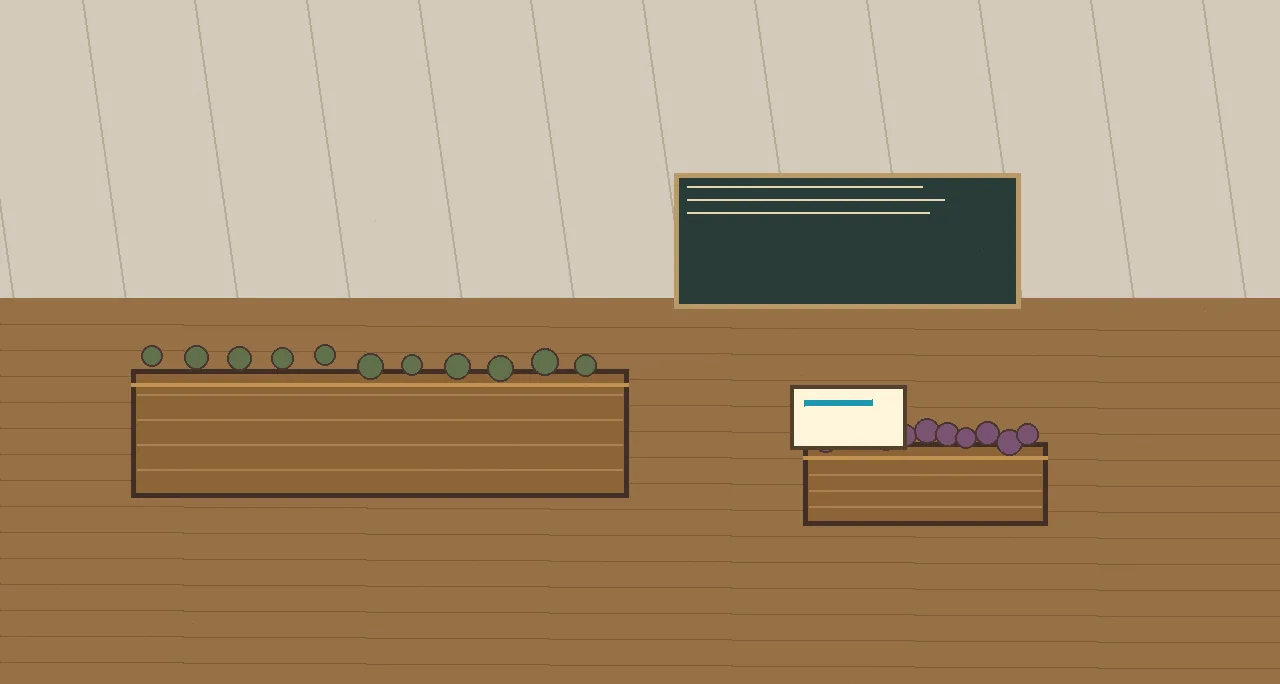
A shopper will return after visiting another stand. They asked whether a few plums could wait in a small basket. There is enough fruit in the open crate for one sale and a little left for later. The vendor can set aside the requested amount or leave all of it in view and offer a smaller basket when the neighbor comes back. Either choice ought to be understandable to the next person who stops at the sale sign.
The prototype A Scale for Two Baskets began with a shared crate that went from full to partly empty. The amount was easy to show until a piece of fruit could be visible on the counter while already promised elsewhere. The short game needed an extra state with a simple explanation. A reservation could be useful in play if the buyer and vendor were able to distinguish it from the current display.
Leave one basket outside the open sale
We put the reserved pieces in a shallow container on the inside edge of the stand. It has a different handle and a narrow card that says it is waiting for pickup. The pieces in the open crate remain visible from the lane. When the player looks back toward the vendor, they can see the distinct basket without confusing it with something on the scale. The number on the card gives the amount that was set aside.
In one version the reserved fruit was shown as a small icon near the price. That tied it to the wrong reading. A buyer could understand the icon and still be unsure whether they could buy the objects in front of them. Moving the card beside the basket makes it possible to see which objects belong to the reservation. The common price remains with the crates that are open for purchase.
Let the returning shopper read an earlier choice
When the neighbor returns, the game can show the origin of the reservation alongside its current location. If the vendor chose a smaller amount, the new offer appears in the place where the reserved basket would have been. Their earlier request can remain visible in the sale record. The amount available now and the amount somebody asked for earlier have different labels.
We use a single extra turn to compare the outcomes. In the first run the player sets aside the requested amount and has less fruit to sell before the shopper returns. In the second, the player keeps more on display and must give the neighbor a clear update. Neither outcome will mean much if the illustration makes the same number of pieces look available in both. The visual record needs to show what moved and how the remaining sale changed.
Keep the same distinction later in the day
In The Late Price Board, a tagged bundle might stand beside the main crate and look like a reservation from the earlier game. We give it a different position and put the available amount on the front. A later shopper should be able to approach without thinking the bundle has already been assigned. The little label follows the bundle when the table moves rather than drifting toward the slate.
The market stalls let a reader compare a reserved basket and a public offer. Start by looking at the handle and label of each from the street. Then check whether the main crates can still be read without looking at either extra card. If the signs need a paragraph of instructions to stay distinct, we can make the next revision in the stall itself. A painted edge, a more useful position or a physically separate basket can carry that distinction into both views.