
Make Change Off the Walkway
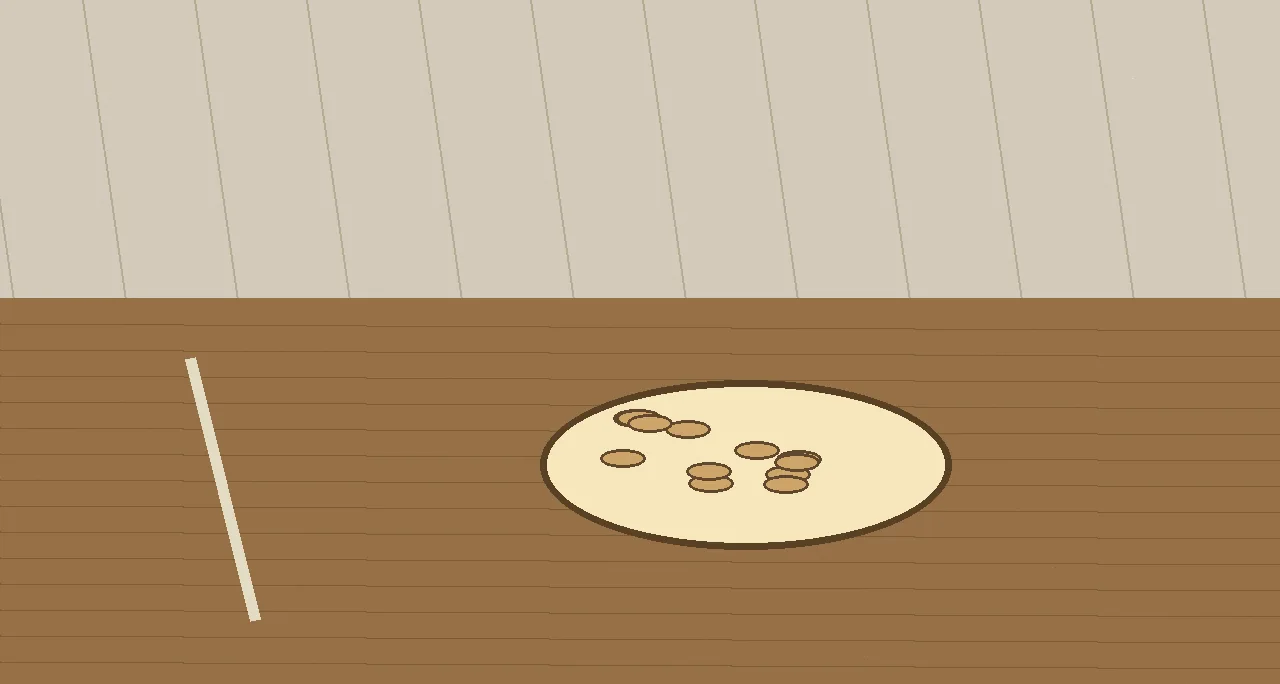
A buyer has agreed to the offer and set their basket beside the scale. They can step to the right to pay. If the coin tray sits on the outer corner of the stand, that step takes them into the little opening where another visitor was about to stop. On the plan of the lane, one step looks like a minor move. From a drawing at the height of the stall, the same step can bring the first shopper in front of nearly the whole sign.
This note describes a small queue problem in A Scale for Two Baskets. We started by drawing the transaction at the scale and the next basket beside it. The coin tray looked like part of the background. Once we let someone approach during the payment turn, the tray became an object that could determine how the room was used.
Keep the payment object near the person using it
One version placed the tray close to the busy edge, so the buyer could see it as soon as they arrived. At payment time they had to turn toward the lane to reach it. That was an appropriate place to draw an exchange in isolation. It did not leave a clear view of the slates or an open route between stalls. We moved the tray closer to the scale and marked a place for the buyer to stand beside the first crate.
The player can still make the visible exchange in the same number of actions. The new position offers a narrow strip of room for another person to pass while the exchange is in progress. A low basket stays out of that space. A caption identifies the place where the shopper stands without putting a translucent label over the open strip.
Look at the scene without moving the first buyer
Freeze the drawing when the first buyer is turning toward the coins. Let the second visitor start at the wide end of the lane, then at the far stall. From one side they can see the price slate. From the other they can see only part of the coin tray. If the way through is clear in both drawings, those different readings make sense. If one view suggests a route exists where another shows a buyer standing, the scale of the two views needs revision.
A useful check is to place the second visitor directly on the route marker without deciding what they came to buy. Their outline should fit in the scene. The figure is only a stand-in for the next action. It can tell us whether the marker really points to an available place. We can then return to the game turn and give the visitor their own basket and choice.
Bring the same question to the folding table
In The Late Price Board, more of the lane is open and the folding table occupies part of the space where the crowd used to stand. That emptiness makes the location of a stopping point clearer. It also creates a new opportunity to put the tag beside the bundle. The next buyer should be able to read the tag without moving into the area the vendor needs in order to reach the crate.
The market stalls show the two arrangements next to their signs. An important difference is the reason somebody stops. At the scale, a customer is completing a purchase. At the late table, someone is still choosing whether to approach. One route can support both people if its shape remains in view while the activity is taking place. Use the earlier drawing from the lane when you test a new position for the tray. If the old marker still fits, the scene can change while the buyer retains a way to read it.